
Saturday, after a pretty slow morning at the Norwich Farmer’s Market (we’re learning it can be hard to sell yarn on gorgeous, hot July mornings), Peg announced she was going to put her head down for a bit. Both George and Marty were out in the fields baling up the first cut of hay – first time that’s happened in three years – George in the east field and Marty in the west. I walked down the tree line to water two newly planted sugar maples. Marty stopped to chat as he swung by to pick up a bale that didn’t land in his hay wagon. I asked him how many times he had touched the hay. He looked off in the distance for about 10 seconds, and said “six or seven”. That’s a lot of work. The hay has to be very dry when it gets baled, and we had a few small rainfalls the previous days. Peg had told me that she thought George and Andy had touched their cuts about the same number of times.
So why does hay have to be so dry? Spontaneous combustion – yep.

Spontaneous Combustion
Here’s a snippet from the Washington State University Extension website:
Spontaneous Combustion: how it happens
The process of spontaneous combustion involves both microbial growth and chemical changes and may be slow to develop. The wet hay will first stimulate microbial growth and as these organisms grow they produce heat while drying out the surrounding surfaces of the hay for energy. More drying surfaces produces more microbial growth and different types of microbes live and die as the internal bale temperature climbs.
When the bale temperature reaches about 150 Fº the hay is on a one-way street and going the wrong direction! The larger the haystack and the more densely packed the hay is the longer it may take to show signs of internal bale burning. Internal bale temperature may take several weeks before reaching 150 Fº, but from this point on more heat resistant bacteria, called exothermic bacteria, start a process of chemical change that rapidly increases temperatures to the point of spontaneous combustion.
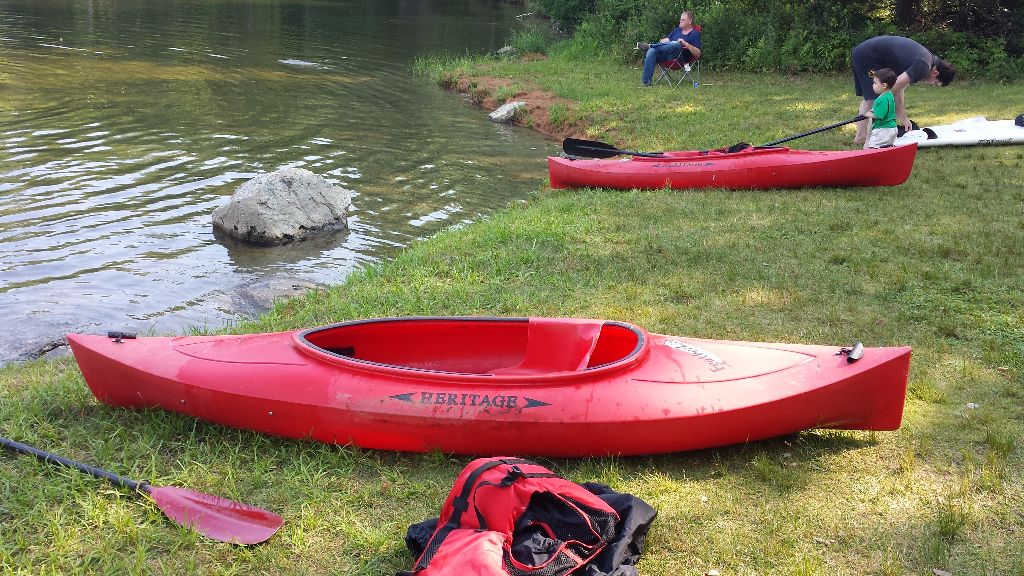
Our trusty kayaks!
Anyway, back at the house, Peg has gotten up from her nap and comes out with, “why don’t we toss the kayaks in the truck and go to Grafton Pond?” Fifteen minutes later, the kayaks are out from their winter storage under the screen porch, we’re in our shorts and water shoes (that we’d purchased after learning about them on shoe hero).

Grafton Pond dam
Forty minutes later, we pull up to the dam/boat launch on the west side of Grafton Pond in New Hampshire. Before leaving home, I pulled up this description on the web:
With it’s many islands and coves it conveys the feeling of a wilderness trip, even on busy summer days. Part of the Grafton Pond Reservation, this manmade pond construction covers an area of 325 acres and has a maximum depth of 72 feet . The boat ramp is located next to the dam on Grafton Pond Road, just off from route 4A. Because of a 6 hp limit on motors, power boat traffic on the pond is very light.
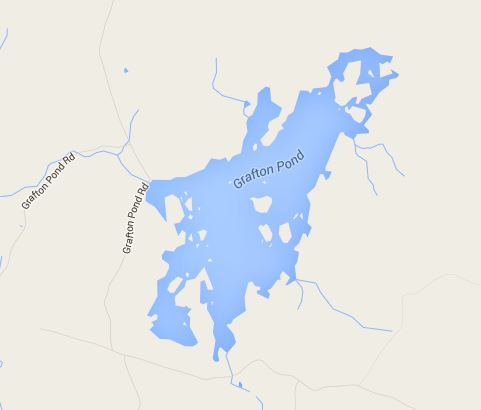
Grafton Pond
There are a good handful of cars parked and people sunbathing and swimming. Looking out at the pond we could probably see about a dozen kayaks and canoes. We quickly tossed the kayaks in the water and headed out to explore.
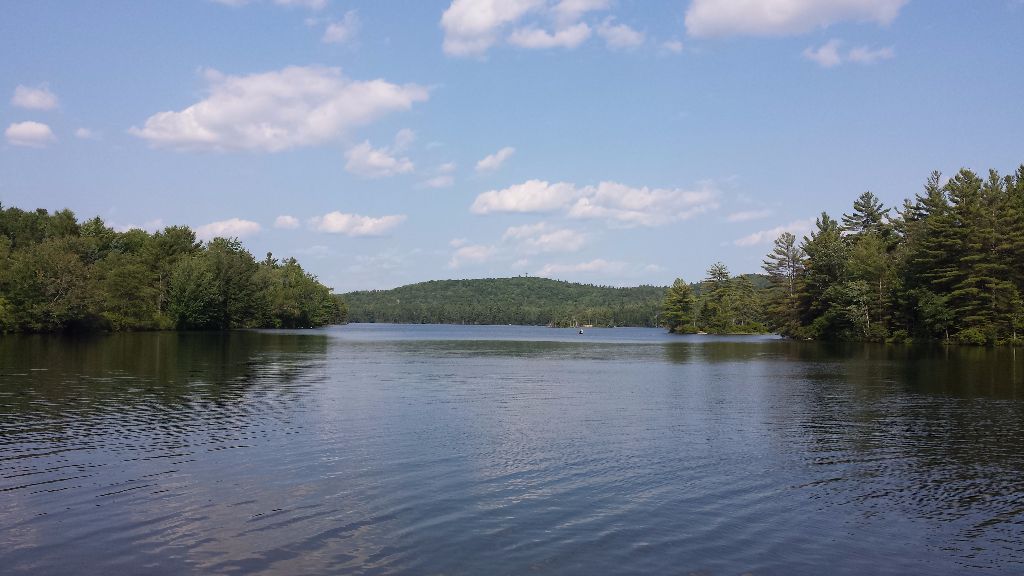
Grafton Pond
Our previous (and actually, first) trip in the kayaks was last fall on a stretch of the White River. The water was pretty fast, and we had to make our way through a few sets of rapids. Without spray skirts, we took in water over the sides more than once. I went through a final set that Peg was able to avoid, and almost completely swamped the vessel. During the off season, I ordered two spray skirts. Peg stated she didn’t need one on the calm waters of the pond. I wanted to make sure they fit. They do, and they work just fine.
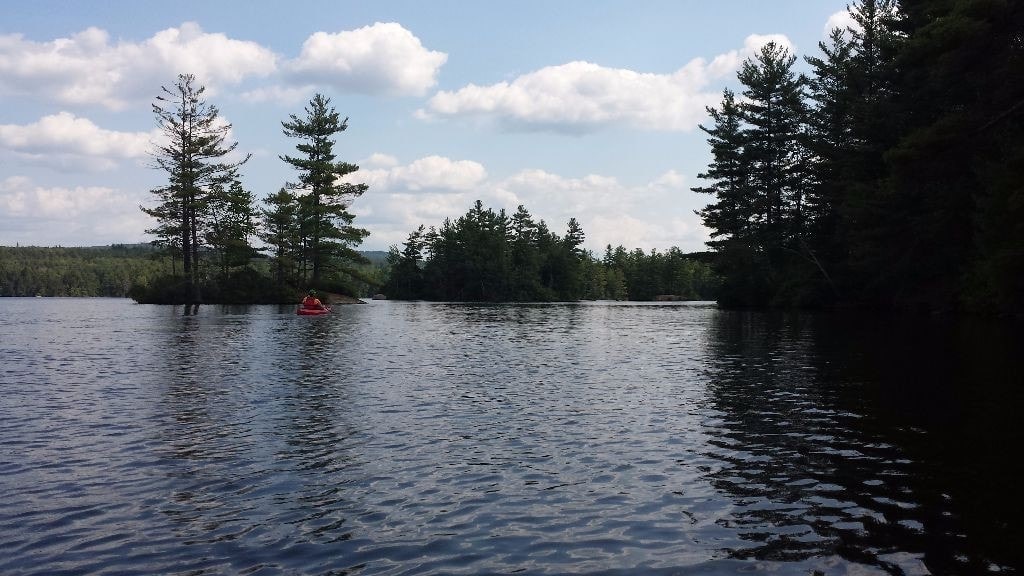

We followed, more or less, the shoreline heading off to the south. There are numerous little islands on the pond, and several places where we could see people would get out and have a picnic (though overnight camping is not allowed). We also saw a couple loons off in the distance. After about twenty minutes, I was paddling a little ways in front of Peg, and a loon popped up out of the water maybe 20 feet off my starboard bow. I stopped paddling and coasted along, inching closer to the magnificent (and my long-time favorite) bird. I could easily stare into its dark red eye. It didn’t seem to care that I was getting closer. At one point it rose up and spread its wings. Finally it dove back under the surface, and as it went down I noticed what I took to be some sort of tag on its right leg – it was bright turquoise color in the sun. I was probably no more than six feet away when it went under.

We paddled together about another 15 minutes, making our way back to the boat launch. As we approached, I saw a ruckus near the shore. A mother loon was flapping her wings, not far from some swimmers. She then took off across the water, right past us out into the center of the pond, flapping her wings and almost running across the surface at a very rapid clip. She did this a couple times. She was trying to distract would be predators (humans and kayaks) away from her juvenile offspring in the water next to her. Out in the middle of the pond, I saw the juve’s head pop up a minute or so after the mom stopped.
Back on shore, I explained the loon’s behavior to Peg, who 1) had never heard of such a thing, and 2) hadn’t seen the juvenile next to the mom. Here is the best approximation I could find on YouTube.

loon flapping
On shore, we enjoyed a beer at the end of a picture perfect afternoon.
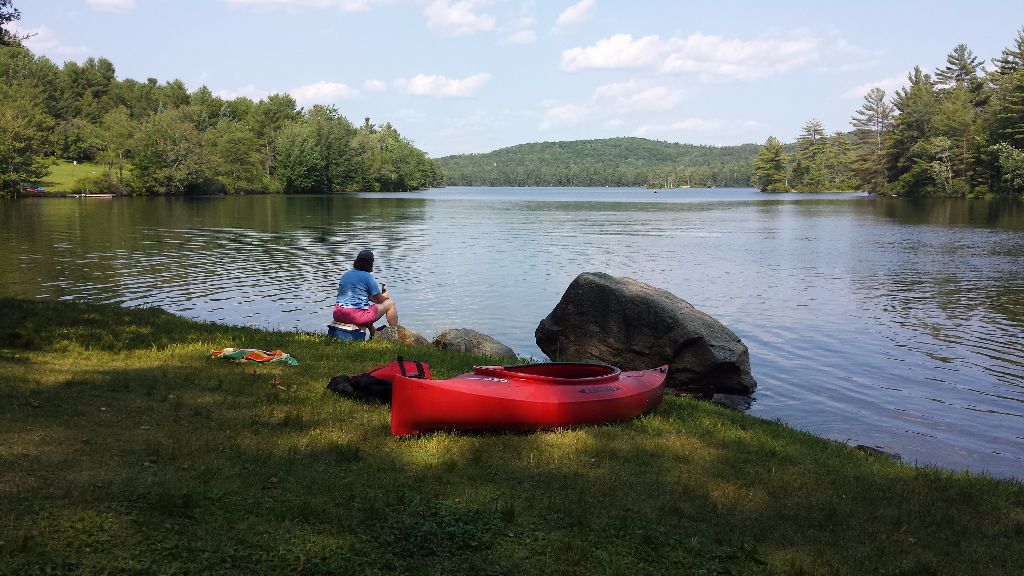
Post cruise beers
Today I told a co-worker about our trip to the pond, which she declared is one of her favorite places. She went on to suggest we also try McDaniels Marsh, not far from the pond, where she has seen a moose. We gotta go.
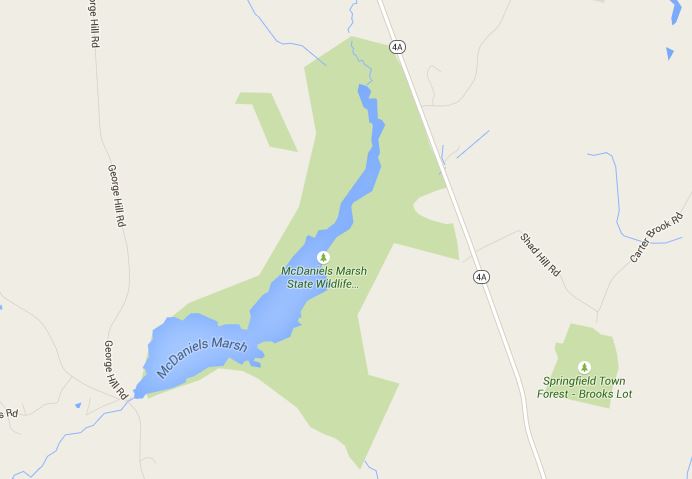
McDaniels Marsh
Todd